Education

Short Answer

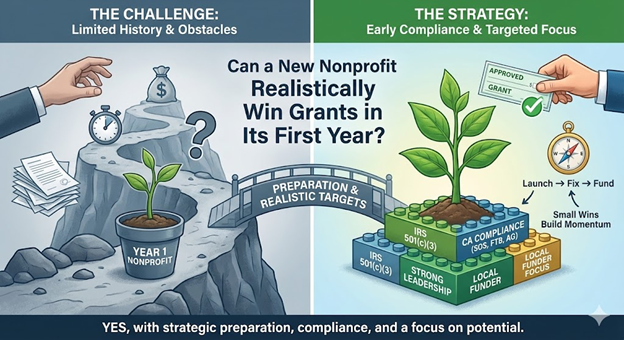
New nonprofits can realistically win grants in their first year if they complete federal 501(c)(3) recognition early in that year, maintain current compliance with California’s three-agency requirements (Secretary of State, Franchise Tax Board, Attorney General Registry), target funders who specifically support emerging organizations or capacity building, demonstrate strong leadership and governance despite limited operational history, and pursue modest initial awards from local or regional sources rather than attempting large national grants requiring extensive track records. Eligibility varies by grant, but first-year success depends more on targeting appropriate funders who value organizational potential and community need over established performance history, while maintaining the compliance profile and documentation organization that allows credible applications despite newness.

What types of grants are actually accessible to first-year nonprofits?

Community foundation grants from regional funders like the Inland Empire Community Foundation often include programs specifically designed for emerging organizations. These funders understand that new nonprofits address emerging community needs or bring fresh approaches to persistent problems, and they’ve built funding programs that value potential and innovation alongside established performance. Community foundation grants to first-year organizations typically range from $5,000-$25,000, providing meaningful seed funding while limiting funder risk through modest award amounts.

Corporate giving programs from businesses with local operations in Riverside and the Inland Empire frequently support new nonprofits, particularly when the nonprofit’s mission aligns with corporate community investment priorities. Corporate funders making decisions locally (rather than through national headquarters) often exercise flexibility in supporting promising new organizations led by trusted community members. Small business sponsorships, employee volunteer grants, and corporate matching gift programs may be accessible even to very new nonprofits with strong community connections.

Individual donor campaigns represent the most accessible funding for first-year nonprofits because individuals don’t typically impose the institutional eligibility requirements that foundations and government funders enforce. Crowdfunding platforms, direct solicitation from personal networks, fundraising events, and major donor cultivation all remain open to new organizations regardless of operational history. Many successful first-year nonprofits build individual donor bases that provide operating support while they develop the track record needed for institutional grants.

Small grassroots grants from service clubs, religious institutions, neighborhood associations, and informal community groups often support first-year nonprofits addressing hyperlocal needs. These funders make modest awards ($500-$5,000) based on relationships, community knowledge, and direct observation of need rather than through formal application processes requiring extensive documentation. While grassroots grants don’t typically provide large amounts individually, they accumulate into meaningful support and build credibility for subsequent institutional applications.

Government grants and large national foundation programs generally remain inaccessible to first-year nonprofits because they require demonstrated capacity, extensive performance history, audited financials, and proven program models. New organizations should generally avoid investing time in applications for these highly competitive funding sources until they’ve accumulated 2-3 years of operations, successful program delivery, and documented outcomes that competitive review processes reward.

What obstacles do first-year nonprofits face that affect grant competitiveness?

Limited operational history creates the primary barrier because funders evaluate applications based partly on past performance predicting future success. When reviewers ask “Has this organization delivered similar programs successfully before?” the honest answer for first-year nonprofits is “No, not under our current structure, though individual leaders may have relevant experience.” This lack of organizational track record doesn’t automatically disqualify applications, but it shifts evaluation focus entirely onto leadership credentials, community partnerships, needs documentation, and program design quality rather than proven effectiveness.

Missing financial history affects competitiveness because many grant applications request multiple years of audited financials, Form 990 filings, or financial statements demonstrating fiscal management capacity. First-year Riverside nonprofits often haven’t filed their first Form 990 yet because it’s not due until the 15th day of the 5th month after their first fiscal year ends. Explaining limited financial history in cover letters helps, but some funders use years of financial data as a screening criterion that automatically eliminates very new applicants regardless of program quality.

Incomplete compliance documentation emerges when first-year nonprofits received IRS determination late in their first year or haven’t yet completed all California registrations. Applications submitted while you’re waiting for IRS determination face rejection from most institutional funders. Applications submitted before registering with the Attorney General Registry of Charities raise legal compliance questions. The timeline to achieve full grant-ready status—completing incorporation, securing IRS recognition, registering with all California agencies, adopting governance policies, filing initial compliance renewals—typically spans 6-12 months minimum, limiting how early in your first year grants become feasible.

Lack of established relationships with funders means program officers don’t know your organization, haven’t conducted site visits, and can’t draw on informal knowledge about your work when evaluating applications. Established nonprofits benefit from years of relationship cultivation—attending funder events, meeting with program officers, participating in grantee convenings, demonstrating consistent performance. First-year organizations start with none of these relationship advantages, requiring applications to stand entirely on documented merit rather than supplemented by relational confidence.

Limited program outcomes and impact data reflect the reality that you haven’t operated long enough to demonstrate results. Applications asking “What outcomes did you achieve in the past three years?” cannot be answered substantively by six-month-old organizations. First-year applicants must present logic models, outcome frameworks, and anticipated results rather than actual measurements, which reviewers inherently trust less than proven track records of effectiveness.

Framework: Launch → Fix → Fund + Federal Recognition + CA Compliance Triangle

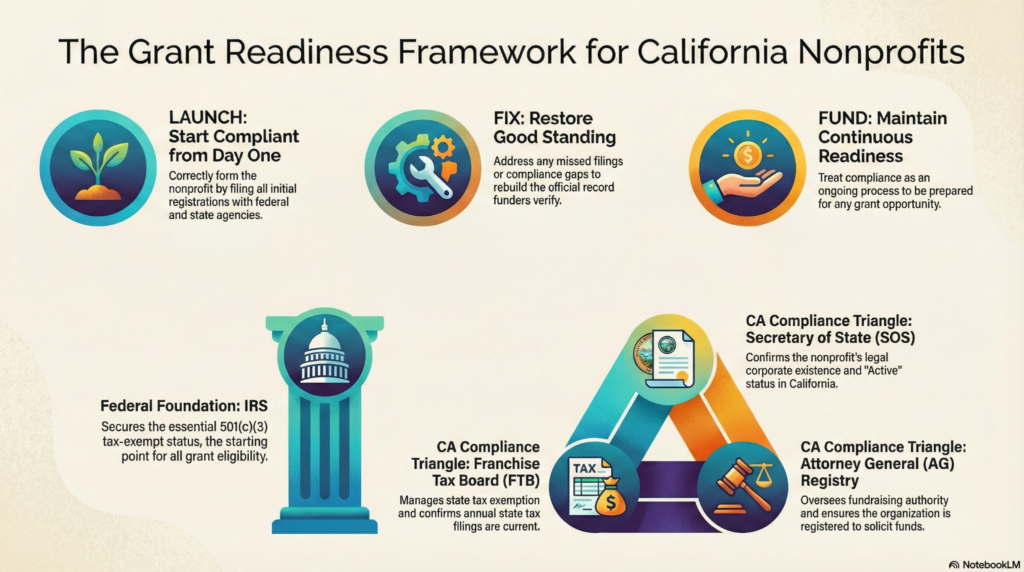
The Nonprofit Launch Office operates within a strategic framework designed to help California nonprofits move from formation to fundability:

Launch determines whether first-year grant success is realistic by establishing the timeline for achieving grant-ready status. Organizations that complete incorporation, IRS application, and California registrations efficiently may achieve full compliance by month 6-8 of their first year, leaving 4-6 months for grant pursuit. Organizations that delay formation steps or encounter IRS processing delays may not achieve grant-ready status until year two. Launch planning should include realistic timeline assessment for when grants become strategically worth pursuing versus when focusing on individual donors makes more sense.

Fix becomes relevant even in the first year when formation steps were completed incorrectly or compliance gaps emerge. First-year organizations that incorporated without proper bylaws, missed Attorney General registration requirements, or submitted incomplete IRS applications may need Fix interventions that further delay grant-readiness. Preventing Fix needs through careful Launch execution allows earlier grant pursuit within the first year.

Fund represents the operational state first-year nonprofits are trying to reach—where grant applications become routine rather than extraordinary efforts, where compliance remains current without crisis management, and where the organization can credibly compete for funding. Some first-year organizations achieve Fund status by late in their first year if they launch well. Others don’t reach Fund status until year two or three if launch was messy or resources were limited.

Federal Recognition through IRS 501(c)(3) determination timing critically affects first-year grant feasibility. Organizations that incorporate in January and receive IRS determination by July have five months for grant pursuit in year one. Organizations that incorporate in September and receive determination in March of year two have essentially no first-year grant window. Accelerating federal recognition timelines—through complete, accurate initial applications that avoid IRS delays—expands first-year grant opportunities.

CA Compliance Triangle requires that first-year Riverside nonprofits achieve simultaneous good standing with all three California agencies (Secretary of State, Franchise Tax Board, Attorney General Registry) plus federal IRS recognition before most institutional grants become accessible. The multi-step nature of California compliance—incorporation, then IRS application, then FTB exemption, then AG Registry registration—creates sequential dependencies that extend the timeline to full grant-ready status and affect how much of year one remains available for grant pursuit after compliance is achieved.

Step-by-step: How NPLO helps first-year nonprofits pursue realistic grant opportunities

Step 1: Timeline Reality Assessment We evaluate where you are in your first year and when you’ll realistically achieve full grant-ready status. If you’re month three post-incorporation with IRS application pending, we can project when determination might arrive and how much of year one remains for grant pursuit. This assessment helps set realistic expectations—pursuing grants may not be strategic if you’ll only have 2-3 months of eligible time in year one.

Step 2: Funder Research and Targeting We identify funders who specifically support emerging organizations, capacity building, or new approaches to community problems. Rather than encouraging applications to funders requiring three years of operational history, we focus on the subset of accessible funders whose eligibility criteria align with first-year realities. This targeted approach prevents wasted effort on inappropriate opportunities.

Step 3: Compliance Acceleration We guide rapid completion of any remaining compliance steps—rushing IRS application if not yet filed, completing California registrations immediately upon IRS determination, adopting essential governance policies quickly. Accelerating compliance completion maximizes the portion of year one available for grant pursuit rather than losing months to delayed paperwork.

Step 4: Strengths Documentation Despite Newness We help articulate organizational strengths that compensate for limited history—leadership team credentials and relevant prior experience, community partnerships and stakeholder support letters, needs assessment data justifying program focus, and program design quality showing thoughtful planning. These elements allow applications to compete on potential rather than proven performance.

Step 5: Modest Goal Setting We help set first-year grant targets that reflect emerging organization realities—pursuing 5-10 small grants totaling $25,000-$50,000 rather than attempting one large $100,000 grant requiring extensive track record. Multiple small wins build momentum, provide program funding, and create success stories strengthening year two applications.

Step 6: Individual Donor Integration We develop parallel individual fundraising strategies that don’t depend on institutional grant eligibility, ensuring operating support flows regardless of grant success. First-year organizations shouldn’t depend entirely on grants that may not materialize—individual donors provide more reliable seed funding while you build grant competitiveness.

Step 7: Strategic Timing Planning We coordinate grant application timing with your organizational development timeline. Rather than applying the moment you receive IRS determination, we may recommend waiting 2-3 months to accumulate program data, complete initial board meetings generating governance documentation, and finalize first-quarter financial statements that strengthen applications. Strategic delay sometimes produces better outcomes than rushing premature submissions.

Step 8: Learning and Relationship Building We help view first-year grant pursuit as much about learning funder expectations and building relationships as about winning immediate awards. Some first-year applications result in funding, others result in feedback and invitations to reapply next cycle with stronger applications. Both outcomes advance toward sustainable funding if approached strategically rather than desperately.

Checklist: What first-year nonprofits need to maximize grant competitiveness

First-year Riverside nonprofits pursuing grants should ensure they have:

  • Complete federal and state compliance with IRS determination, California SOS Active status, FTB exemption, and AG Registry registration all current
  • Governance infrastructure including adopted bylaws, complete board roster, conflict of interest policy, and documented board meetings showing active oversight
  • Program documentation with clear descriptions, logic models showing how activities produce outcomes, and preliminary data even if limited
  • Financial foundation including operating budget, financial policies, bank account with responsible management, and whatever financial statements your stage allows
  • Leadership credentials documented through bios, resumes, or narratives showing relevant expertise and community trust
  • Community support evidence through letters from partners, beneficiary testimonials, or needs assessments validating program focus
  • Realistic outcome expectations that acknowledge limited history while presenting credible frameworks for measuring future success
  • Appropriate funder targets selected for emerging organization focus rather than established performer requirements
  • Modest funding requests matching first-year organizational capacity rather than overreaching beyond credible scale
  • Clear organizational narrative explaining why you formed, what gap you address, and why community needs justify supporting new approaches
  • Professional application materials despite newness—organized, well-written, complete submissions demonstrating competence
  • Patience and persistence recognizing that first-year grant success is possible but not guaranteed, and that building momentum takes time
  • Parallel funding strategies including individual donors who don’t require institutional eligibility criteria
  • Learning orientation that extracts value from application feedback regardless of immediate funding outcomes
  • Relationship cultivation with funders you target for year two or three even if year one applications don’t succeed

Quick Answers (PPA)

What’s a realistic grant fundraising goal for a nonprofit’s first year? Realistic first-year grant targets vary widely based on when you achieve compliance, how much time remains for applications, and your specific funding landscape. Conservative planning might target $10,000-$25,000 in first-year grants from multiple small awards, while aggressive strategies in favorable conditions might pursue $50,000-$75,000. However, many successful nonprofits raise little to no grant funding in year one because they spend most of the year completing formation and building foundations, achieving grant-ready status too late for substantial pursuit. Setting expectations around building grant capacity in year one rather than depending on grants for survival prevents crisis when grants don’t materialize as quickly as hoped.

Should I wait until year two to pursue grants so I have more history, or start immediately when eligible? This depends on your specific timeline and capacity. If you achieve full compliance in month 6-7 of your first year, pursuing grants in months 8-12 makes strategic sense—you’re building experience, developing applications, establishing funder relationships, and possibly winning modest awards. If you don’t achieve compliance until month 10-11, investing time in grant applications with only 1-2 months remaining may not be strategic—focusing on individual donors and preparing for aggressive year two grant pursuit might produce better results. The key is assessing whether you have sufficient time and organizational readiness to make first-year grant pursuit worthwhile rather than defaulting to “apply immediately” regardless of circumstances.

Do funders explicitly say they accept first-year nonprofits, or do I need to read between the lines? Some funders explicitly state eligibility for “emerging organizations,” “capacity building,” or “organizations in their first three years,” making first-year eligibility clear. Other funders have eligibility criteria that don’t explicitly exclude new organizations but also don’t encourage them—requiring “demonstrated track record” or “evidence of programmatic success” suggests preference for established organizations but doesn’t absolutely bar first-year applicants with strong cases. When eligibility is ambiguous, contacting program officers directly to ask about first-year applicant viability prevents wasting time on inappropriate opportunities. Many program officers appreciate the outreach and provide honest guidance about whether application makes sense.

What if I have relevant experience from previous organizations—does that count as organizational history? Individual team member experience absolutely strengthens first-year applications even though the organization itself lacks history. Applications should prominently feature leadership bios highlighting relevant credentials, prior program management experience, subject matter expertise, and community trust built through previous work. However, be clear about the distinction—”Our Executive Director has ten years of youth development experience, though our organization formed six months ago” presents leadership strength honestly without misrepresenting organizational age. Some funders value experienced leadership enough that it compensates for organizational newness. Others maintain organizational history requirements regardless of individual credentials.

Are there advantages to being a new nonprofit when seeking grants? Yes, strategically positioned. Some funders specifically seek innovative approaches and emerging solutions rather than established programs, viewing new organizations as sources of fresh thinking and adaptive programming. New organizations can sometimes move faster and experiment more readily than established nonprofits with bureaucratic constraints. First-year status can also generate community excitement and volunteer engagement that demonstrates grassroots support to funders. Finally, some funders set aside resources specifically for capacity building and organizational development available only to emerging organizations, creating funding opportunities established nonprofits can’t access. The key is targeting funders who value these newness advantages rather than viewing all funders through the same lens.

What to do next (DIY vs Done-With-You)

DIY approach: Conduct honest assessment of where you are in year one—have you completed IRS determination, California registrations, governance adoption, and initial program operations? Calculate how many months remain in year one after achieving full compliance, recognizing you need at least 3-4 months of eligible time to make grant pursuit worthwhile. Research funders explicitly supporting emerging organizations by searching “grants for new nonprofits California,” “capacity building grants Inland Empire,” and reviewing community foundation websites for programs targeting first-year organizations. Review eligibility criteria carefully rather than applying broadly—does “demonstrated track record” mean you’re excluded, or can strong leadership credentials substitute? Develop modest first-year grant targets focused on multiple small awards rather than few large ones. Create parallel individual donor strategies ensuring operating support regardless of grant outcomes. View first-year grant pursuit as learning and relationship building as much as immediate fundraising—feedback and invitations to reapply create year two advantages even when year one applications don’t yield awards.

Done-With-You approach: The Nonprofit Launch Office provides realistic first-year grant strategy for Riverside and Inland Empire nonprofits balancing optimism with honest assessment. We evaluate your specific timeline and readiness to determine whether grant pursuit makes strategic sense in year one or whether building foundations for year two produces better outcomes, research and identify funders whose eligibility criteria and mission focus align with first-year organizational realities, accelerate any remaining compliance steps to maximize time available for grant pursuit within year one, help document organizational strengths that compensate for limited history—leadership credentials, community partnerships, needs justification, program design quality, develop appropriately modest grant targets matching first-year capacity and funder accessibility, create integrated fundraising strategies combining realistic grant goals with individual donor cultivation, provide application development support emphasizing potential and planning over proven performance, and position first-year efforts as foundation building for sustained grant success in years two and beyond. This guidance prevents unrealistic expectations that create financial crisis when grants don’t materialize while maximizing whatever first-year grant opportunities genuinely exist.

Contact

Book: https://thedocumentpro.com/
 Call: 1(800) 285-0078
 Email: mydocumentpro@gmail.com
 The Nonprofit Launch Office™ — a discipline of The Document Pro, operated by Gitta Williams.
 Operated by The Document Pro (Gitta Williams)

Sources


Disclaimer

Document preparation and nonprofit readiness support — not legal or tax advice.
Short Answer

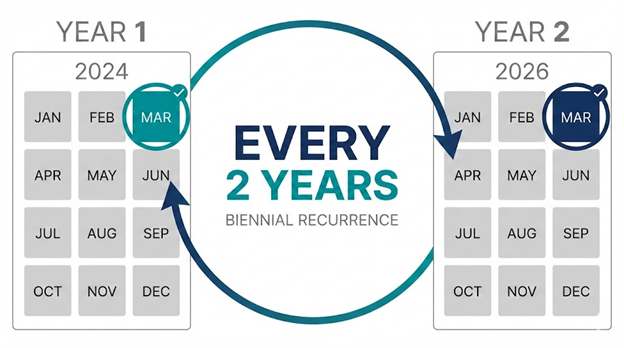
The Statement of Information is a biennial filing with the California Secretary of State that updates public records showing a nonprofit’s current directors, principal office address, registered agent, and chief executive officer information. California nonprofits must file this statement every two years during the calendar month their Articles of Incorporation were originally filed, and tracking this deadline matters critically because failure to file triggers suspension, loss of “Active” status, and inability to conduct legal business or access grant funding. Eligibility for most grants requires current Statement of Information compliance, making this seemingly administrative filing essential for maintaining fundable status.

What exactly is the Statement of Information and what does it accomplish?

The Statement of Information is California’s mechanism for keeping public corporate records current with accurate, up-to-date information about who runs each nonprofit and where it operates. When you originally filed Articles of Incorporation to create your nonprofit, you provided initial information about directors, officers, and addresses. The Statement of Information updates that snapshot every two years, reflecting changes in leadership, locations, or registered agents that have occurred since formation or the last filing.

This filing serves multiple public purposes. It allows anyone conducting business with your nonprofit to identify current leadership and verify where to send legal notices. It enables government agencies to contact appropriate representatives when compliance issues arise. It provides potential donors and grant makers with confidence that organizational information is current and accurate. Most importantly for Riverside and Inland Empire nonprofits, it’s the filing that maintains your “Active” status with the Secretary of State—the status funders verify before releasing grants.

The Statement of Information requires specific categories of information: names and addresses of current directors, the principal office address where corporate records are maintained, the registered agent name and street address for receiving legal service of process, the chief executive officer name and address, and designation of the type of business. While the information itself is straightforward, the significance lies in the legal requirement to keep it current and the consequences of allowing the filing to lapse.

For nonprofits incorporated in California, this isn’t optional administrative paperwork—it’s a statutory filing requirement tied directly to your corporate existence. The California Corporations Code mandates biennial filing, establishes specific timing requirements, and authorizes suspension and eventual involuntary dissolution for organizations that fail to comply. Understanding this legal context helps explain why grant makers consider Statement of Information status a fundamental compliance checkpoint.

Why does the biennial filing schedule create tracking challenges for nonprofits?

Unlike annual filings that happen on a consistent date every year, the Statement of Information operates on a biennial cycle keyed to your original incorporation date. If your nonprofit filed Articles of Incorporation in March 2020, you must file Statement of Information updates in March 2022, March 2024, March 2026, and so on. The calendar month determines your filing window—you must file during that specific month every two years.

This biennial timing creates several tracking complications. First, the deadline only comes around half as often as annual obligations, making it easier to forget between cycles. Second, different nonprofits have different filing months depending on when they incorporated, so you can’t rely on general reminders or common deadlines that work for all California organizations. Third, a two-year gap between filings means leadership turnover often occurs between submissions, and new board members or staff may not be aware the obligation exists.

Many Riverside nonprofits discover Statement of Information problems only when conducting status checks for grant applications. They filed their initial Statement of Information after incorporating, assumed that satisfied the requirement permanently, and never realized biennial updates were mandatory. Years pass, the filing becomes overdue, the Secretary of State suspends the entity, and suddenly the nonprofit can’t open bank accounts, enter contracts, or receive grant funds until they cure the delinquency and pay associated penalties.

Calendar management becomes critical. Successful nonprofits either establish perpetual calendar reminders recurring every two years in their filing month, or they assign Statement of Information tracking as a specific board or staff responsibility with documented procedures. Some organizations file slightly early—California allows filing up to three months before the due month—to avoid last-minute rushes or processing delays that could result in late penalties.

Framework: Launch → Fix → Fund + Federal Recognition + CA Compliance Triangle

The Nonprofit Launch Office operates within a strategic framework designed to help California nonprofits move from formation to fundability:

Launch means understanding Statement of Information requirements from day one and establishing tracking systems immediately after incorporation. Your first Statement of Information deadline arrives approximately two years after filing Articles of Incorporation, during the same calendar month. Setting that initial calendar reminder as part of launch procedures prevents the forgotten filing that triggers suspension down the road.

Fix addresses situations where nonprofits have missed Statement of Information deadlines, been suspended by the Secretary of State for noncompliance, or let multiple biennial cycles pass without filing. Restoration requires filing all overdue Statements of Information, paying late fees and penalties, and requesting reinstatement to Active status. During suspension, your nonprofit cannot legally conduct business in California and funders will reject grant applications immediately.

Fund focuses on maintaining continuous Statement of Information compliance so Secretary of State status checks always show “Active” without any suspension flags. This means tracking your specific biennial filing month, monitoring for Secretary of State notices about upcoming deadlines, filing on time every cycle, and verifying that filings processed correctly by checking entity status after submission. Fund-lane work treats Statement of Information compliance as routine governance maintenance.

Federal Recognition means securing and maintaining IRS determination of 501(c)(3) status, which provides the foundation for grant eligibility but doesn’t eliminate state-level filing requirements like Statement of Information. Federal recognition and state corporate compliance operate on separate tracks—you need both simultaneously. Many nonprofits maintain excellent federal compliance while inadvertently falling out of state compliance through missed Statement of Information filings.

CA Compliance Triangle represents the three-agency verification system unique to California. Statement of Information is the Secretary of State’s corner of this triangle—the filing that determines whether your corporate entity remains “Active” and in good standing. The other two corners (Franchise Tax Board exemption and Attorney General Registry registration) have their own filing schedules, but Statement of Information is uniquely important because suspension by the Secretary of State can prevent you from conducting any legal business in California.

Step-by-step: How NPLO helps track and maintain Statement of Information compliance

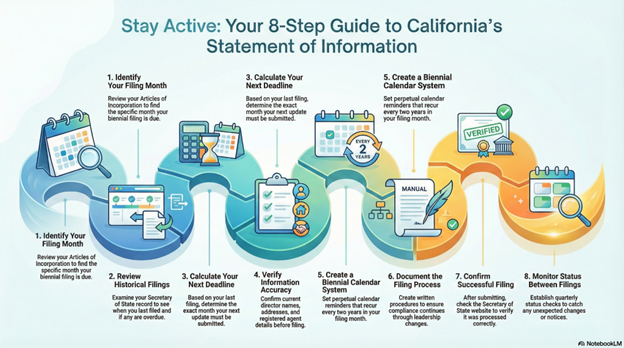
Step 1: Filing Month Identification We identify your nonprofit’s specific Statement of Information filing month by reviewing your Articles of Incorporation filing date or checking Secretary of State records. This establishes the calendar month when your biennial obligation recurs. Knowing your filing month is the foundation of effective tracking.

Step 2: Historical Filing Review We examine your Secretary of State entity record to determine when you last filed Statement of Information and whether any filings are currently overdue. This historical view reveals whether you’re on schedule, approaching a deadline, or already delinquent. Many Riverside nonprofits discover they’ve missed multiple cycles during this assessment.

Step 3: Next Deadline Calculation We calculate your next Statement of Information deadline based on your filing month and last submission date. Since filings are due biennially, this determines the exact month when your next update must be submitted. We document this deadline prominently in your compliance calendar with advance notice periods.

Step 4: Information Accuracy Verification We review the information that will appear on your next Statement of Information—current director names and addresses, principal office location, registered agent details, CEO information—to ensure accuracy before filing. Discovering that your registered agent resigned or your office moved requires addressing those changes before or during the Statement of Information submission.

Step 5: Biennial Calendar System Creation We establish perpetual calendar reminders recurring every two years in your filing month, with advance notices at 90 days, 60 days, and 30 days before the deadline. This multi-level reminder system prevents the forgotten filing that triggers suspension. Calendar entries include specific filing instructions and links to the Secretary of State portal.

Step 6: Filing Process Documentation We create documented procedures for completing and submitting Statement of Information, including gathering required information, accessing the Secretary of State filing system, paying filing fees, and obtaining confirmation of acceptance. Written procedures ensure that filing responsibility can transfer smoothly when staff or board leadership changes.

Step 7: Confirmation and Verification Protocol After filing Statement of Information, we verify that the Secretary of State processed the submission by checking entity status and confirming the filing appears in your corporate record. This catch step ensures that technical problems or processing errors didn’t prevent successful completion despite your submission.

Step 8: Status Monitoring Between Filings We establish quarterly Secretary of State status checks even in years when Statement of Information isn’t due, catching any unexpected changes or notices that might affect your Active status. This ongoing monitoring prevents surprises when you need to verify status for grant applications.

Checklist: What you should have ready before you apply

Having these items organized ensures Statement of Information compliance doesn’t become a last-minute obstacle when grant opportunities emerge:

  • Incorporation date and filing month clearly documented so you know when biennial obligations occur
  • Most recent Statement of Information confirmation showing the date of your last successful filing
  • Current director roster with complete names and residential or business addresses for all sitting directors
  • Principal office address where corporate records are maintained, updated if your location changed since last filing
  • Registered agent information including current agent name and California street address for service of process
  • Chief executive officer details with complete name and address of the person serving in this capacity
  • Secretary of State entity number for quick access to your corporate record when checking status or filing updates
  • Calendar system with perpetual biennial reminders set for your specific filing month plus advance notices
  • Filing fee payment method ready since Statement of Information requires payment (currently $20 for California nonprofits)
  • Secretary of State portal credentials if using online filing, or familiarity with paper filing procedures if preferred
  • Board resolution or authorization documenting who has authority to file Statement of Information on behalf of the organization
  • Change documentation for any updates to directors, addresses, or registered agent that need to be reflected in the filing
  • Confirmation retention system for storing Statement of Information receipts and processing confirmations
  • Status verification routine for checking Secretary of State entity record quarterly to ensure Active status persists
  • Contact information for the Secretary of State’s business entities division in case questions arise during filing
Quick Answers (PPA)

What happens if I miss the Statement of Information deadline? Missing your Statement of Information deadline triggers a suspension process by the Secretary of State. Initially, you may receive notices warning that filing is overdue. If you continue not filing, the Secretary of State suspends your entity, changing your status from “Active” to “Suspended.” During suspension, your nonprofit cannot legally conduct business in California, funders will reject grant applications, and you cannot enforce contracts or defend lawsuits. Curing suspension requires filing all overdue Statements of Information and paying late penalties, which can add significant costs beyond the standard filing fee.

Can I file Statement of Information early or do I have to wait for my filing month? California allows early filing of Statement of Information up to three months before your designated filing month. Many Riverside nonprofits use this window strategically, filing in the month or two before their deadline to avoid last-minute complications. Early filing is particularly useful if you’re preparing grant applications that will be submitted during your filing month—you can complete the Statement of Information early, verify processing, and have clean Active status when funders conduct verification checks.

Does Statement of Information filing cost money and who pays it? Yes, Statement of Information filing requires a fee paid to the California Secretary of State. The current fee for California nonprofit corporations is $20, though fees can change and you should verify the current amount when filing. The filing fee is a legitimate organizational expense paid from nonprofit operating funds. Some organizations budget this as a biennial expense, while others include it in general compliance or administrative budgets. The fee is separate from any penalties that may apply for late filing.

If my board composition hasn’t changed, do I still need to file Statement of Information? Yes, absolutely. Statement of Information filing is mandatory every two years regardless of whether any information changed since your last filing. Even if your directors, addresses, and registered agent remain identical, you must submit the biennial update confirming that information is still current. The filing itself is the compliance requirement—the Secretary of State needs the periodic confirmation, not just notification of changes. Failing to file simply because “nothing changed” still results in suspension.

How do I know if my Statement of Information was processed successfully? After submitting Statement of Information, you can verify successful processing by checking your entity status through the Secretary of State’s business entity search. Search for your nonprofit using your entity number or exact legal name. The entity detail page should show your most recent Statement of Information filing date, and your status should remain “Active” without suspension flags. Allow a few business days for processing—if you check immediately after submitting, the update may not appear yet. Keep your filing confirmation receipt as proof of submission in case processing questions arise.

What to do next (DIY vs Done-With-You)

DIY approach: Look up your nonprofit’s incorporation date from your Articles of Incorporation or Secretary of State entity record—the month of incorporation is your biennial Statement of Information filing month. Calculate when your next filing is due (the same month every two years). Set perpetual calendar reminders recurring biennially in that month, with advance notices at 90, 60, and 30 days. Gather current information about your directors, principal office, registered agent, and CEO. Visit the California Secretary of State website, locate the Statement of Information filing portal, and prepare to file during your designated month. Budget for the filing fee. After filing, verify that the Secretary of State processed your submission by checking entity status a week later.

Done-With-You approach: The Nonprofit Launch Office provides Statement of Information tracking and filing support as part of comprehensive California compliance services. We identify your specific filing month based on incorporation records, review historical filing compliance to catch any overdue submissions, calculate next deadline dates and establish advance reminder systems, verify information accuracy before filing, prepare and submit Statement of Information filings on your behalf, coordinate payment of required fees, confirm successful processing through Secretary of State verification, and maintain ongoing monitoring of your entity status between filing cycles. This approach is particularly valuable for Riverside and Inland Empire nonprofits where board turnover creates institutional knowledge gaps about biennial filing requirements, or where tracking multiple compliance obligations across different agencies becomes overwhelming for volunteer leadership.

Contact

Book: https://thedocumentpro.com/
Call: 1(800) 285-0078
Email: mydocumentpro@gmail.com
The Nonprofit Launch Office™ — a discipline of The Document Pro, operated by Gitta Williams.
Operated by The Document Pro (Gitta Williams)

Sources
Disclaimer

Document preparation and nonprofit readiness support — not legal or tax advice.
Short Answer

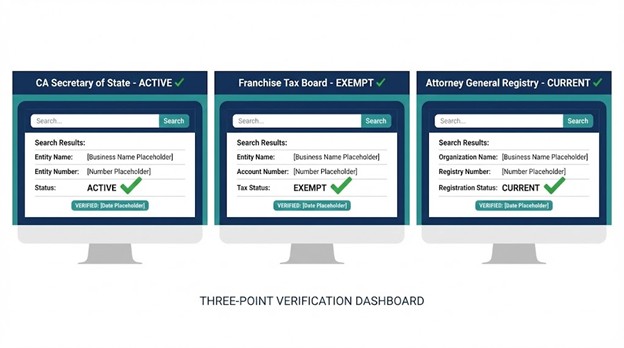
California nonprofits check their status conceptually by understanding three distinct verification points: the Secretary of State (SOS) confirms corporate entity status and registered agent compliance through the online business search tool, the Franchise Tax Board (FTB) verifies state tax exemption status through their exempt organization database, and the Attorney General Registry of Charities (AG) shows fundraising registration and annual renewal status through the Registry search portal. Each agency maintains separate online databases that nonprofits and funders can access independently, and eligibility for grants typically requires current “Active” or “good standing” status with all three agencies simultaneously, plus federal IRS recognition.

Why does California divide nonprofit oversight among three different agencies?

California’s regulatory structure distributes nonprofit oversight responsibilities across three separate state agencies because each serves a distinct protective function under state law. The Secretary of State manages corporate existence and public records through the Business Programs division, the Franchise Tax Board administers state taxation including exemptions for qualifying organizations, and the Attorney General’s Registry of Charities protects charitable assets and regulates fundraising to prevent fraud and misuse of donations.

This division reflects California’s specific statutory framework where corporate law, tax law, and charitable solicitation law operate under separate legal authorities. Unlike some states that consolidate nonprofit oversight in a single agency, California’s system requires organizations to maintain relationships with multiple government entities, each with its own filing schedules, documentation requirements, and compliance protocols.

For Temecula and Inland Empire nonprofits, this multi-agency structure means that checking your status isn’t a single lookup but rather a systematic verification process across three different databases. You might be perfectly current with the Secretary of State but suspended by the Franchise Tax Board, or Active with both while delinquent with the Attorney General’s Registry. Each agency tracks compliance independently and can take enforcement action without coordinating with the others.

Understanding this conceptual framework helps explain why grant makers in California typically verify multiple data points before approving funding. They’re not being unnecessarily bureaucratic—they’re confirming that your nonprofit maintains legal standing across all relevant regulatory authorities. A compliance gap with any single agency can block your ability to operate legally or receive funding, regardless of your status with the other two.

What does each agency actually track and why does it matter for funding?

The Secretary of State tracks your nonprofit’s corporate existence and structural compliance. When you check SOS status, you’re verifying that your nonprofit remains a legally recognized entity in California, has a current registered agent who can receive legal notices, and has filed required Statement of Information updates showing current directors and principal office address. SOS status of “Active” means your corporate entity exists and is compliant with these basic structural requirements.

The Franchise Tax Board tracks your state tax exemption status and annual filing compliance. Even though California exempts qualifying 501(c)(3) organizations from the standard $800 annual franchise tax, you must still file annual information returns (Form 199 or 199N) to maintain that exemption. FTB status verification shows whether you’re current with these filings or have been suspended for delinquency. Suspension triggers financial penalties and can affect your ability to conduct business in California.

The Attorney General’s Registry of Charities tracks your authorization to solicit charitable contributions in California. Most nonprofits must register with the Registry within 30 days of first receiving assets and file annual renewal reports (RRF-1) to maintain active registration. AG Registry status shows your CT number (Charity Trust registration number) and whether your annual reporting is current. Operating without current registration when required violates state charitable solicitation law and creates legal liability.

Funders verify all three because each addresses a different risk. SOS verification confirms you’re a legal entity that can enter contracts. FTB verification confirms you’re not operating under suspension that could affect financial transactions. AG Registry verification confirms you’re legally authorized to receive charitable funds. All three must show current standing for the funder to proceed with confidence that the grant relationship is legally sound.

Framework: Launch → Fix → Fund + Federal Recognition + CA Compliance Triangle

The Nonprofit Launch Office operates within a strategic framework designed to help California nonprofits move from formation to fundability:

Launch means forming your nonprofit correctly from day one with all three California agencies properly registered. This includes filing Articles of Incorporation with the Secretary of State to create corporate existence, obtaining initial exemption from the Franchise Tax Board to avoid unnecessary tax obligations, and registering with the Attorney General’s Registry of Charities before first receiving assets. Proper launch creates clean initial status across all three agencies.

Fix addresses situations where a nonprofit has fallen out of good standing with one or more agencies—suspended by FTB for missed annual filings, delinquent with AG Registry for failure to file RRF-1 renewals, or facing involuntary dissolution by SOS for failure to maintain a registered agent. Restoration requires understanding which agency has the problem, what filings are missing, and coordinating multi-agency submissions to regain full compliance.

Fund focuses on maintaining continuous current status across all three agencies so status checks never reveal problems. This means tracking three separate filing calendars—biennial Statement of Information with SOS, annual Form 199 with FTB, annual RRF-1 with AG Registry—and ensuring submissions happen on schedule. Fund-lane work treats multi-agency compliance as routine maintenance rather than crisis intervention.

Federal Recognition means securing and maintaining IRS determination of 501(c)(3) status through initial application and ongoing Form 990 filing compliance. Federal recognition serves as the prerequisite for state-level exemptions and provides the foundation that California’s three-agency structure builds upon. Most funders verify federal status through IRS TEOS before checking California agency status.

CA Compliance Triangle represents the three-agency verification system unique to California: the Secretary of State (corporate status), the Franchise Tax Board (tax exemption), and the Attorney General Registry of Charities (fundraising authority). Grant readiness for Temecula nonprofits requires understanding how to check status with each agency independently and maintaining current standing with all three simultaneously.

Step-by-step: How NPLO helps verify and maintain multi-agency status

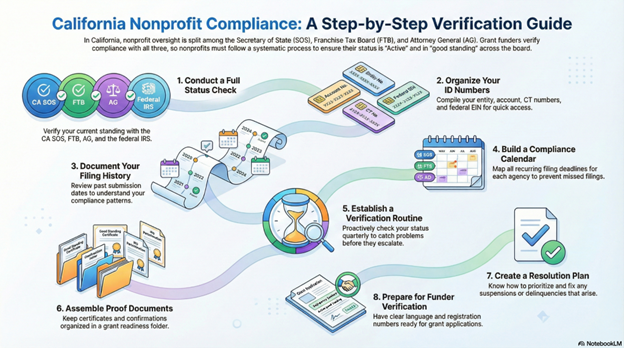
Step 1: Comprehensive Status Check Across All Agencies We conduct systematic verification of your nonprofit’s current standing with all three California agencies plus federal IRS status. This includes checking Secretary of State business entity search for Active status, Franchise Tax Board exempt organization lookup for exemption and filing compliance, Attorney General Registry search for current registration and RRF-1 status, and IRS TEOS for federal recognition. This baseline assessment reveals exactly where you stand.

Step 2: Entity Information Organization We compile the specific identifiers needed for status verification—your Secretary of State entity number, Franchise Tax Board exemption account number, Attorney General CT number, and federal EIN. Having these organized allows quick status checks and helps funders verify your standing independently when they conduct due diligence.

Step 3: Filing History Documentation We review your filing history with each agency to understand compliance patterns—when was your last Statement of Information filed with SOS, when was your most recent Form 199 submitted to FTB, when was your latest RRF-1 filed with AG Registry. This historical view identifies recurring problems or patterns that suggest systemic compliance issues.

Step 4: Compliance Calendar Creation We build a master calendar showing all recurring filing deadlines across the three agencies—Statement of Information due every two years in the month your Articles were filed, Form 199 due on the 15th day of the 5th month after your fiscal year ends, RRF-1 due based on your registration anniversary date. Color-coded deadlines help prevent the missed filings that trigger status problems.

Step 5: Verification Protocol Establishment We create a quarterly verification routine where you systematically check status with all three agencies using bookmarked database links and documented search procedures. This proactive monitoring catches problems early before they escalate into suspensions or delinquencies that funders discover during application review.

Step 6: Proof Document Assembly We organize the certificates and confirmation documents that prove current status to funders—Secretary of State certificate of good standing or business search printout showing Active status, Franchise Tax Board exemption letter or online verification, and Attorney General confirmation of current registration. These documents go in your grant readiness folder for quick access.

Step 7: Discrepancy Resolution Guidance When status checks reveal problems—suspended FTB status, delinquent AG Registry filing, or registered agent issues with SOS—we help prioritize which problems to address first, identify required filings or payments, and coordinate multi-agency submissions to restore full compliance efficiently.

Step 8: Funder Verification Support We prepare clear language explaining your compliance status for grant applications, including specific registration numbers funders need for independent verification. If status problems exist, we help craft appropriate disclosures and demonstrate remediation efforts that maintain funder confidence during restoration periods.

Checklist: What you should have ready before you apply

Having these items organized allows you to check your status quickly and provide verification information to funders when requested:

  • Secretary of State entity number from your original Articles of Incorporation filing or Statement of Information confirmations
  • Exact legal name as registered with the Secretary of State, which may differ from your DBA or common name
  • Current registered agent information including agent name and street address as shown in SOS records
  • Franchise Tax Board exemption account number from your FTB 3500 exemption approval or correspondence
  • FTB filing history showing most recent Form 199 or 199N submission date and confirmation
  • Attorney General CT number (Charity Trust registration number) from your initial CT-1 filing or RRF-1 renewals
  • AG Registry filing history showing most recent RRF-1 submission date and acceptance
  • Federal EIN used consistently across all agency filings and official documents
  • IRS determination letter showing 501(c)(3) recognition with the legal name matching your California registrations
  • Bookmarked database links for quick access to all three agency search portals
  • Login credentials if any agency requires account access for detailed status information
  • Filing calendar showing upcoming deadline dates for each agency’s recurring requirements
  • Contact information for relevant agency departments in case status checks reveal questions or discrepancies
  • Recent bank statements or cancelled checks showing payment of any fees required by agencies
  • Board minutes documenting registered agent appointments or changes that affect SOS status
Quick Answers (PPA)

Can I check all three agencies in one place or do I need separate searches? California does not provide a unified database showing your status across all three agencies. You must check each agency independently using their separate online portals. Secretary of State has a business entity search tool, Franchise Tax Board has an exempt organization lookup, and Attorney General has a Registry of Charities search. Some third-party services aggregate this data, but official verification requires visiting each agency’s system directly. Temecula nonprofits pursuing grants benefit from bookmarking all three search portals and establishing quarterly verification routines.

How long does it take for status changes to appear in each database? Update timing varies by agency and filing type. Secretary of State typically updates entity status within a few business days of receiving and processing your Statement of Information. Franchise Tax Board can take several weeks to update exemption status after receiving and processing Form 199, particularly during peak filing seasons. Attorney General Registry updates generally within a few weeks of receiving RRF-1 renewals. If you file something and immediately check status, you may not see the update yet—agencies need processing time before database changes reflect.

What if one agency shows good standing but another shows problems? This scenario is common and reflects the independent nature of California’s multi-agency system. You might be Active with Secretary of State while suspended by Franchise Tax Board if you filed your Statement of Information but missed your Form 199. Or you might be current with both SOS and FTB but delinquent with Attorney General if you missed an RRF-1 filing. Grant makers typically require good standing with all relevant agencies, so even one problem can block funding until resolved. Priority should go to whichever agency has enforcement action pending.

Do all California nonprofits need to check all three agencies? Most California nonprofits need to verify status with all three agencies. All California nonprofits incorporated as corporations must maintain Secretary of State compliance. All nonprofits claiming tax exemption must maintain Franchise Tax Board compliance. Most nonprofits that solicit contributions must maintain Attorney General Registry compliance, though some small religious organizations and certain other entities have exemptions. When in doubt, verify status with all three—excess verification is safer than missing a requirement.

How often should I check status across all three agencies? Many grant-ready nonprofits establish quarterly verification checks as part of routine governance. At minimum, check all three agencies annually before major grant seasons, whenever you receive any compliance notice from any agency, before submitting significant grant applications, and after filing required documents to verify processing. More frequent checking helps catch problems early when they’re easier to fix. Some Inland Empire nonprofits assign status verification as a standing board committee task with quarterly reporting.

What to do next (DIY vs Done-With-You)

DIY approach: Create bookmarks for all three agency search portals—California Secretary of State business search at bizfileonline.sos.ca.gov, Franchise Tax Board exempt organization search through their website, and Attorney General Registry of Charities search at oag.ca.gov/charities. Gather your entity number, FTB account number, CT number, and EIN. Visit each portal and search for your organization using these identifiers. Document what you find—Active, suspended, current, delinquent—and save dated screenshots or printouts. Create a spreadsheet tracking verification dates and status results. Set quarterly calendar reminders to repeat the process. If you discover problems, research the specific filing or payment needed to resolve them.

Done-With-You approach: The Nonprofit Launch Office provides comprehensive multi-agency status verification and monitoring as part of grant readiness services. We check your current standing across all three California agencies plus federal IRS status, identify specific compliance gaps with detailed remediation guidance, organize all relevant identifiers and proof documents, establish custom filing calendars reflecting your nonprofit’s specific deadlines, create quarterly monitoring protocols with documented results, and provide ongoing support when status checks reveal problems or questions. This approach is particularly valuable for Temecula and Inland Empire nonprofits pursuing multiple funding opportunities where the time invested in learning three different agency systems plus the risk of missing compliance requirements typically exceeds the cost of professional monitoring support.

Contact

Book: https://thedocumentpro.com/
Call: 1(800) 285-0078
Email: mydocumentpro@gmail.com
The Nonprofit Launch Office™ — a discipline of The Document Pro, operated by Gitta Williams.
Operated by The Document Pro (Gitta Williams)

Sources
Disclaimer

Document preparation and nonprofit readiness support — not legal or tax advice.
Short Answer

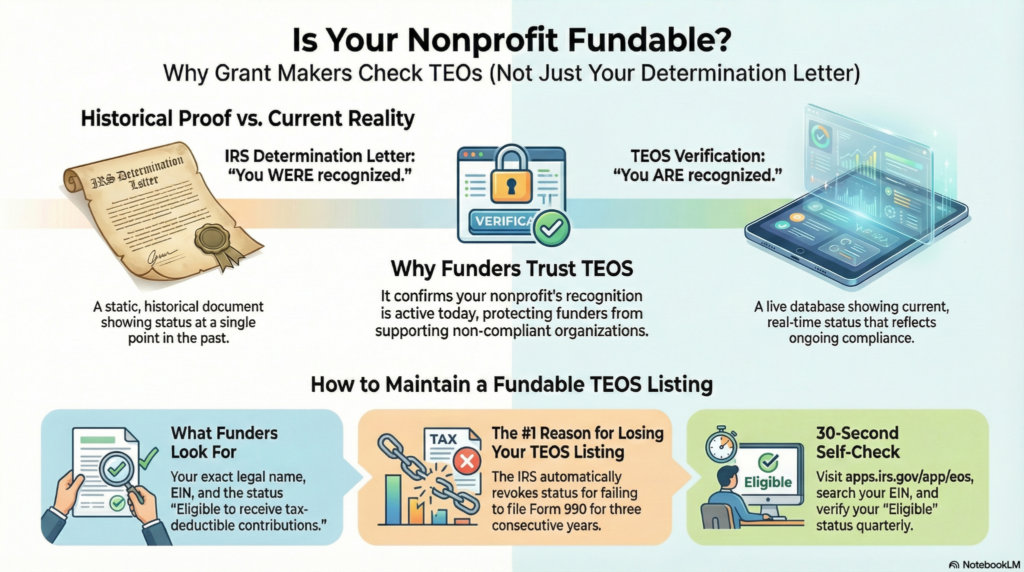
IRS Tax Exempt Organization Search (TEOS) is a free online database at apps.irs.gov/app/eos where anyone can verify a nonprofit’s current federal tax-exempt status, determination date, and eligibility to receive tax-deductible contributions. Grant makers, donors, and financial institutions regularly check TEOS to confirm that an organization holds legitimate 501(c)(3) recognition before releasing funds, making TEOS listing essential for credibility and access to most institutional funding. Eligibility varies by grant, but nearly all funders require verifiable federal recognition as a baseline qualification.

What exactly is TEOS and how does it work?

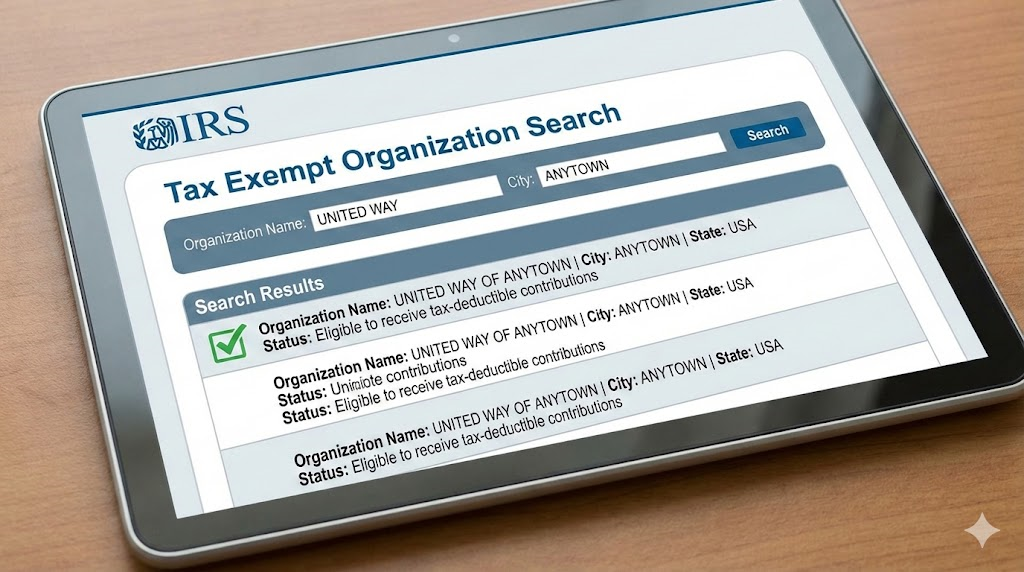
The IRS Tax Exempt Organization Search tool is a publicly accessible database maintained by the Internal Revenue Service that lists organizations currently recognized as tax-exempt under various sections of the Internal Revenue Code. For 501(c)(3) charitable organizations—the category most relevant for grant-seeking nonprofits in San Bernardino and the Inland Empire—TEOS provides instant verification that an organization holds current federal recognition and is authorized to receive tax-deductible contributions.

When you search TEOS using an organization’s legal name or Employer Identification Number, the database returns basic information including the organization’s official name, EIN, mailing address, determination date (when the IRS granted exemption), and subsection code (typically 501(c)(3) for charitable organizations). The database also indicates whether the organization is currently eligible to receive tax-deductible contributions, which is the critical verification point for most funders and donors.

TEOS updates regularly as the IRS processes new exemption applications and revokes recognition from organizations that fail to meet annual filing requirements. If a nonprofit appears in TEOS with “Eligible to receive tax-deductible contributions” status, it confirms current federal recognition. If an organization doesn’t appear in TEOS or shows revoked status, it signals serious compliance problems that will block most funding opportunities.

The tool replaced earlier publication-based systems where the IRS released annual lists of exempt organizations on CD-ROM or paper. TEOS provides real-time verification that’s accessible 24/7 from any internet connection, making it the go-to resource for due diligence checks. Most San Bernardino area funders now verify TEOS status as a standard first step in their application review process.

Why do grant makers rely on TEOS instead of just asking for determination letters?

TEOS verification provides current status in a way that determination letters alone cannot. A nonprofit might possess a valid determination letter from years ago but have lost its tax-exempt status since then due to failing to file required annual returns (Form 990 series) for three consecutive years. The IRS automatically revokes recognition for nonprofits that miss this filing requirement, but the organization still has the original determination letter—it’s just no longer valid.

By checking TEOS, funders confirm that the organization’s federal recognition is active today, not just that it was granted at some point in the past. This protects funders from inadvertently supporting organizations that have lost their exempt status, which could create tax complications for the funder and legal liability for both parties. Grant contracts often specify that funding is contingent on maintaining tax-exempt status throughout the grant period, and TEOS provides the mechanism for verifying compliance.

TEOS also prevents fraud and misrepresentation. Determination letters can be forged or altered, and organizations can continue claiming tax-exempt status long after losing it. Because TEOS is controlled by the IRS and updated regularly, it serves as an authoritative third-party verification that funders trust more than self-reported documentation. Most institutional grant applications now specifically request that applicants provide their EIN so reviewers can independently verify TEOS status.

For Inland Empire nonprofits pursuing funding from sources like community foundations, corporate giving programs, or government contracts, understanding that TEOS verification happens behind the scenes helps explain why EIN accuracy is critical and why maintaining annual filing compliance directly affects funding access. A simple failure to file Form 990-N for small organizations can trigger revocation that immediately ends grant eligibility until resolved.

What does “active” actually mean when funders check your nonprofit?

When a grant maker says they’re verifying your nonprofit is “active,” they’re generally looking at more than just whether your organization exists on paper. In California, active status is a three-part verification process that spans multiple government agencies. A nonprofit can be legally incorporated with the Secretary of State but still be considered inactive or ineligible by funders if it’s delinquent with the Franchise Tax Board or the Attorney General’s Registry of Charities.

This multi-agency reality often surprises first-time grant applicants in Temecula and throughout the Inland Empire. Many assume that having an IRS determination letter and being “Active” with the California Secretary of State is sufficient. However, institutional funders—foundations, county grant programs, and federal pass-through awards—typically require documentation proving current compliance across all relevant agencies before they’ll release funds.

The verification process exists to protect donors and grant makers from directing resources to organizations that cannot legally operate or solicit funds. When a nonprofit falls out of compliance with any one agency, it may lose its ability to enforce contracts, accept certain types of donations, or maintain its tax-exempt status, creating legal and financial risk for the funder.

Why do grant makers care about multiple agencies instead of just one?

California’s regulatory structure divides nonprofit oversight among three separate state agencies, each with distinct filing requirements and enforcement authority. This creates what’s often called the “California Compliance Triangle.” The Secretary of State tracks corporate existence and registered agent information. The Franchise Tax Board monitors tax exemption status and annual filing requirements. The Attorney General’s Registry of Charities oversees fundraising activity and asset protection.

Grant makers verify all three because each agency serves a different protective function. A nonprofit that’s current with the Secretary of State but delinquent with the Attorney General technically cannot solicit donations legally in California, which creates liability for any funder distributing money to that organization. Similarly, a nonprofit suspended by the Franchise Tax Board may lose its state tax exemption, affecting how donations are treated for state tax purposes.

Federal recognition through the IRS adds another verification layer. The IRS Tax Exempt Organization Search tool allows funders to confirm that a nonprofit holds current 501(c)(3) status and is eligible to receive tax-deductible contributions. Many grant programs require proof of federal recognition as a baseline eligibility criterion, then layer on state compliance requirements.

For Temecula-based nonprofits seeking funding from sources like the Inland Empire Community Foundation or county grant programs, understanding this verification structure is essential. Local funders often know the compliance landscape well and may reject applications immediately if they detect gaps in multi-agency standing.

Step-by-step: How NPLO helps maintain verifiable TEOS status

Step 1: TEOS Status Verification We check your nonprofit’s current TEOS listing using your EIN and legal name, confirming that you appear in the database with “Eligible to receive tax-deductible contributions” status. This verification identifies any discrepancies in how your organization is listed versus how you’re presenting your name on grant applications.

Step 2: EIN Accuracy Audit We verify that your EIN is being used consistently across all official documents—IRS filings, California registrations, grant applications, banking documents, and fundraising materials. EIN inconsistencies can prevent funders from verifying your TEOS status even when your recognition is valid.

Step 3: Annual Filing Compliance Assessment We review your Form 990 filing history to ensure you’re meeting the annual return requirement that maintains TEOS listing. This includes confirming you’re filing the appropriate form type (990, 990-EZ, or 990-N) based on your gross receipts and total assets, and that filings are submitted by required deadlines.

Step 4: Determination Letter Organization We help locate and organize your original IRS determination letter, which funders may request alongside TEOS verification. If your determination letter is lost or outdated, we assist with requesting replacement documentation from the IRS using Form 4506-A.

Step 5: TEOS Printout Preparation We generate current TEOS printouts showing your organization’s listing with eligible status, which many funders accept as supplementary proof of federal recognition. These printouts demonstrate to reviewers that your status is current as of the application date.

Step 6: Revocation Risk Prevention We establish filing calendar systems that prevent the three-year failure-to-file scenario that triggers automatic revocation. This includes advance reminders, deadline tracking, and Form 990 preparation planning well before submission deadlines.

Step 7: Application Language Preparation We help craft the federal recognition narrative that appears in grant applications, clearly stating your TEOS-verified status, determination date, and EIN. This language helps reviewers complete verification checks quickly and confidently.

Step 8: Ongoing TEOS Monitoring We provide quarterly TEOS status checks to catch any unexpected listing changes or data inaccuracies that could affect funder verification. Early detection allows correction before problems block active grant applications or pending awards.

Checklist: What you should have ready before you apply

Funders may verify TEOS status through different methods depending on their due diligence procedures. Having these items organized ensures smooth verification regardless of funder approach:

  • Accurate EIN written consistently across all application materials, matching exactly how it appears in TEOS and on your IRS determination letter
  • Exact legal name as registered with the IRS, which may differ slightly from your doing-business-as (DBA) name or common name
  • Current TEOS printout downloaded from apps.irs.gov/app/eos showing your organization’s listing with eligible status and current date
  • Original IRS determination letter showing 501(c)(3) recognition with your organization’s legal name, EIN, and determination date clearly visible
  • Most recent Form 990, 990-EZ, or 990-N confirmation demonstrating current annual filing compliance that maintains your TEOS listing
  • Verification instructions explaining to funders how to search TEOS using your EIN if they prefer independent verification over accepting your printout
  • Mailing address matching what appears in TEOS, or explanation for any discrepancies if your organization has relocated since last IRS filing
  • Subsection code confirmation (typically 501(c)(3) for charitable organizations) that matches funder eligibility requirements
  • Determination date readily available for applications asking when your organization received federal recognition
  • Foundation classification (usually “Public Charity” rather than “Private Foundation”) as this affects certain grant eligibility criteria
  • Advance ruling expiration information if your organization received conditional recognition initially and needs to document transition to permanent status
Quick Answers (PPA)

What if my nonprofit doesn’t appear in TEOS at all? If your organization doesn’t appear in TEOS, it typically means one of several situations: you never applied for federal tax-exempt recognition, your application is still pending with the IRS, your recognition was revoked due to failure to file annual returns for three consecutive years, or you’re searching with incorrect information (wrong name or EIN). Check your determination letter for the exact legal name and EIN the IRS has on file. If you’ve lost recognition due to revocation, you’ll need to file delinquent returns and apply for retroactive reinstatement before you can pursue most grants.

Can a nonprofit operate without being listed in TEOS? Legally, a nonprofit can incorporate and operate programs without federal tax-exempt recognition or TEOS listing. However, contributions to such organizations are not tax-deductible for donors, and most institutional funders require TEOS-verifiable 501(c)(3) status as a baseline eligibility criterion. Some San Bernardino area nonprofits operate under fiscal sponsorship arrangements where the sponsor’s TEOS status covers activities until the new organization secures its own recognition. This provides temporary access to funding while completing the recognition process.

How quickly does TEOS update after filing annual returns? TEOS generally updates within a few weeks after the IRS processes your annual Form 990 filing. However, updates can be delayed during peak filing seasons or if your return encounters processing issues. If a funder checks TEOS immediately after your filing deadline but before IRS processing completes, your listing may still show the previous year’s information. Many funders understand this timing and will accept your filed return confirmation as interim proof of compliance until TEOS reflects the update.

Does TEOS show if a nonprofit is in good standing with California? No, TEOS only verifies federal IRS recognition and does not include information about California state compliance. San Bernardino nonprofits need separate verification of status with the California Secretary of State, Franchise Tax Board, and Attorney General Registry of Charities. Most regional funders check TEOS for federal status plus all three California agencies for state compliance, creating a four-point verification requirement that TEOS alone cannot satisfy.

What happens if funders find discrepancies between TEOS and my application? Discrepancies in legal name, EIN, or address between TEOS listing and grant application materials often trigger immediate verification problems that pause application review. Common issues include using a DBA name on applications when TEOS shows a different legal name, transposed EIN digits, or outdated addresses. Funders may request explanation and documentation to reconcile differences, or may reject applications if discrepancies suggest poor record-keeping or misrepresentation. Prevention through careful verification before applying avoids these delays.

What to do next (DIY vs Done-With-You)

DIY approach: Visit apps.irs.gov/app/eos and search for your organization using your exact legal name or EIN. Verify that your listing shows “Eligible to receive tax-deductible contributions” status. Download and save a current printout with today’s date for your grant readiness folder. Compare the information in TEOS (legal name, EIN, address) against your determination letter and other official documents to identify any discrepancies. If you find problems or can’t locate your organization, contact the IRS Exempt Organizations department at 877-829-5500 for assistance. Set a quarterly calendar reminder to re-verify your TEOS status.

Done-With-You approach: The Nonprofit Launch Office provides comprehensive TEOS verification and compliance monitoring as part of grant readiness assessments. We verify your current listing, identify any discrepancies between TEOS and your documentation, ensure EIN consistency across all materials, organize proof documents for funder verification, establish filing calendar systems that prevent revocation risk, and conduct quarterly monitoring to catch problems early. This approach is particularly valuable for San Bernardino and Inland Empire nonprofits pursuing multiple funding opportunities where TEOS verification happens repeatedly, and where the cost of a revocation or verification problem far exceeds the investment in proactive monitoring.

Contact

Book: https://thedocumentpro.com/
Call: 1(800) 285-0078
Email: mydocumentpro@gmail.com
The Nonprofit Launch Office™ — a discipline of The Document Pro, operated by Gitta Williams.
Operated by The Document Pro (Gitta Williams)

Sources
Disclaimer

Document preparation and nonprofit readiness support — not legal or tax advice.