
04 Mar Non-profit Registration Fast Track in Perris, CA
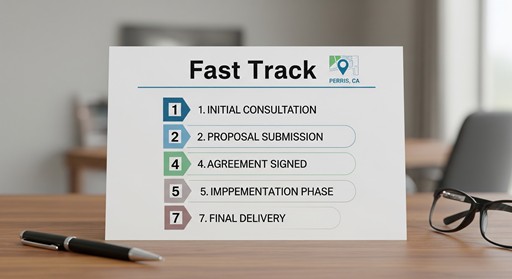
a nonprofit in Perris, CA and you want to move fast, the real secret isn’t speed—it’s eliminating rework. Most “fast track” attempts fail because founders submit incomplete paperwork, mix up details across documents, or start the IRS track without organizing the basics.
This guide gives you a practical Fast Track Path to get your nonprofit paperwork organized the clean way—so you can submit with confidence and avoid delays caused by corrections.
Start here (full guide): “Non-Profit Startup in California: Documents & Filing Timeline Explained”
Link: The Document Pro | Maintain A Nonprofit
Answer-First: The Perris Fast Track Path (What actually speeds things up)
If you want your nonprofit registration to move faster, focus on the steps that prevent preventable delays:
- Build a complete document packet before you submit anything (one folder, consistent details).
- Start with a clean Articles of Incorporation draft that matches your mission and structure.
- Prepare governance docs early (bylaws + conflict policy) so you don’t scramble later.
- Secure your EIN and organize your key facts so forms don’t conflict.
- Treat “same-day” as same-day prep/submission readiness, not same-day approval.
- Create a “submission-ready” checklist and do a final review for common rejection triggers.
Fast track = clean packet + correct sequence.
Quick Actions Checklist (Do This Today)
- Create one folder: NONPROFIT – PERRIS CA – FAST TRACK PACKET
- Lock your exact nonprofit name (same spelling everywhere)
- Draft or confirm Articles of Incorporation (California nonprofit format)
- Draft/confirm Bylaws
- Draft/confirm Conflict of Interest Policy
- Gather board/officer details (names + roles)
- Obtain/confirm your EIN
- Make a one-page Key Facts Sheet (name, mission, contacts, board, planned activities)
- Decide the likely IRS path: 1023 vs 1023-EZ (prep basics now)
- Do a final “delay trigger” review before any submission
Step 2: Complete the Initial Statement of Information
The California Initial Statement of Information (Form SI-100) must be filed within 90 days of incorporation. It lists your organization’s addresses, board members, and officers. While this form is not required at the moment of incorporation, having it prepared in advance demonstrates organizational readiness and speeds the post-incorporation workflow. NPLO prepares this form as part of the same-day document package.
Step 3: Confirm Registered Agent Details
California requires every nonprofit corporation to designate a registered agent — an individual or entity with a physical California street address — to receive legal notices and official correspondence. The registered agent’s name and address must appear accurately on the Articles of Incorporation. A P.O. box does not satisfy this requirement. NPLO reviews this designation as part of document preparation to prevent a common and easily avoidable filing rejection.
Step-by-Step: The Fast Track Framework (Minimal Delay Path)
Step 1: Use the “One Folder Rule”
Create a single folder and keep everything inside it—PDFs + editable originals. This alone prevents the most common urgent-filing chaos.
Suggested subfolders:
- 01 Articles
- 02 Bylaws
- 03 Conflict Policy
- 04 EIN
- 05 IRS Tax-Exempt Prep
- 06 Key Facts Sheet
Step 2: Draft Your Articles the “Clean Way”
Your Articles of Incorporation are the keystone. Speed comes from clarity:
- correct nonprofit structure (California format)
- consistent name and purpose
- no missing fields or mismatched info
Step 3: Lock Governance Documents Early (Bylaws + Conflict Policy)
Founders often delay these. That creates rework later—especially if your team is trying to open banking, pursue donations, or prepare for exemption filings.
Step 4: Secure the EIN (and store it properly)
If you already have it, store the confirmation in your folder. If you don’t, don’t wait until “later.” EIN issues create slowdowns that feel avoidable—because they are.
Step 5: Prep the IRS Track Basics (Don’t submit blind)
You don’t need to finish everything immediately, but you should have the basics organized so you’re not restarting later:
- mission clarity
- planned activities overview
- basic budget/operating assumptions (even simple)
Step 6: Do a “Delay Trigger” Review (before submission)
Before any submission, scan for:
- inconsistent names
- missing signatures
- incomplete leadership details
- unclear purpose statements
- missing attachments you intended to include
Step 7: Submit with a Clean Packet (and track next steps)
Fast track isn’t just “submit.” It’s “submit cleanly, then track what’s next,” so you don’t lose momentum.
<iframe width=”560″ height=”315″ src=”https://www.youtube.com/embed/hZmikfkQB90?si=_KJF14kZAzWiGR47″ title=”YouTube video player” frameborder=”0″ allow=”accelerometer; autoplay; clipboard-write; encrypted-media; gyroscope; picture-in-picture; web-share” referrerpolicy=”strict-origin-when-cross-origin” allowfullscreen></iframe> PT1M54S
On-page video idea (60–90 seconds):
- What “fast track” really means (clean packet > rushing)
- The 7-step framework
- The top 3 delay triggers
- What you can do today vs what can wait
Common Mistakes That Slow Down “Fast Track” Filings
- Thinking speed matters more than completeness
- Submitting Articles with inconsistent names or purpose details
- Waiting on bylaws/conflict policy until after submission
- Not organizing board/officer details early
- Confusing “same-day prep” with “same-day approval”
- Starting IRS steps without a clear basic plan
- Not maintaining a single source of truth (Key Facts Sheet)
When to Get Help (and what to ask)
If you’re confident writing forms, you can DIY. But if you’re under time pressure and you want to reduce rework, it helps to get support focused on:
- checking your packet for completeness
- keeping document details consistent
- guiding you through the correct sequence
- helping you prepare for next steps after incorporation
What to ask for: “Packet review, submission readiness, and a clean step-by-step plan.”
Local Note (Perris / Inland Empire)
Perris founders often move fast because timelines are real—events, launches, community programs, and funding deadlines don’t wait. A “fast track” approach helps because it’s built around being ready, not just being urgent.
Frequently Asked Questions
What does “fast track nonprofit registration” actually mean in Perris, CA?
It means reducing delays by submitting a clean, complete packet in the right sequence. The goal is fewer corrections, fewer missing items, and a smoother path from incorporation to next steps.
Can I get my nonprofit approved the same day in California?
“Same-day” usually applies to document preparation and submission readiness—not guaranteed approval. Government processing timelines can vary, so the fastest lever you control is packet quality.
What documents should I prepare first to move faster?
Start with Articles of Incorporation, then bylaws and a conflict policy, then EIN organization. Keep everything consistent with a Key Facts Sheet to avoid mismatches across forms.
Do I need IRS tax-exempt status before I file at the state level?
Typically, incorporation happens first, then the federal exemption pathway. Even so, prepping your IRS basics early prevents rework and loss of momentum.
What’s the biggest reason fast filings get delayed?
Incomplete packets and inconsistent information. “Fast” submissions that require corrections often take longer than careful submissions done once.
Does after-hours support mean my filing is processed after hours?
No. After-hours support refers to intake, guidance, and document preparation coverage. Government processing is controlled by the appropriate agencies and can vary.
Additional Resources
- Starting a Nonprofit in California
- Documents Needed to Start a Non-Profit in Perris, CA
- Urgent 24/7 Non-Profit Filing Help in Perris, CA
- Top Rated Non-Profit Filing Companies Near Perris
Authoritative External Sources
- California Secretary of State — Nonprofit filing requirements, fee schedules, and business name availability.
- IRS Exempt Organizations Division — Form 1023, Form 1023-EZ, 501(c)(3) application standards, and processing timelines.
- California Attorney General's Registry of Charitable Trusts — Charitable organization registration, renewal requirements, and compliance reporting.
- National Council of Nonprofits — Formation best practices and ongoing compliance guidance.
- Nonprofit Quarterly — Industry standards and governance benchmarks.
- Better Business Bureau — General business reliability verification resource.
Sources & References
- California Secretary of State — Official guidelines on nonprofit filing requirements, fee schedules, and processing options.
- IRS Exempt Organizations Division — Federal standards for 501(c)(3) tax-exempt applications, Forms 1023 and 1023-EZ, and determination procedures.
- California Attorney General's Office — Charitable organization regulations, Conflict of Interest Policy requirements, and Registry of Charitable Trusts oversight.
- National Council of Nonprofits — Compliance checklists and nonprofit governance best practices.
- Better Business Bureau — General business reliability verification resource; not cited as a source for NPLO-specific ratings.
- Nonprofit Quarterly — Industry benchmarks for nonprofit formation service standards and governance practices.
Contact
Book: https://thedocumentpro.com/
Call: 1(800) 285-0078
Email: mydocumentpro@gmail.com
The Nonprofit Launch Office™ — a discipline of The Document Pro, operated by Gitta Williams.
Operated by The Document Pro (Gitta Williams)